Guide · legality · Tokyo
Can you still go-kart in Tokyo? Is it legal in 2026?
This is the question we get more than any other, and it comes with a nervous look. People read about Nintendo suing the go-kart company, saw headlines about it being shut down, and assumed the whole thing vanished. It did not. Something did change, though, and it is worth knowing exactly what before you book.
 Written by Mia Nakamura, licensed Tokyo go-kart tour guide
The short answer
Yes, you can still go-kart in Tokyo, and it is legal. Tours run every day, including through Shibuya. Nintendo's lawsuit was never about the karts: it was about the MariCar name and the rented Mario costumes. Nintendo won, the name is gone, and the Nintendo costumes are gone. The karts, the roads and the tours carry on exactly as before. You still need to be 18 with a licence and a 1949-Geneva International Driving Permit.
Can you still go-kart in Tokyo?
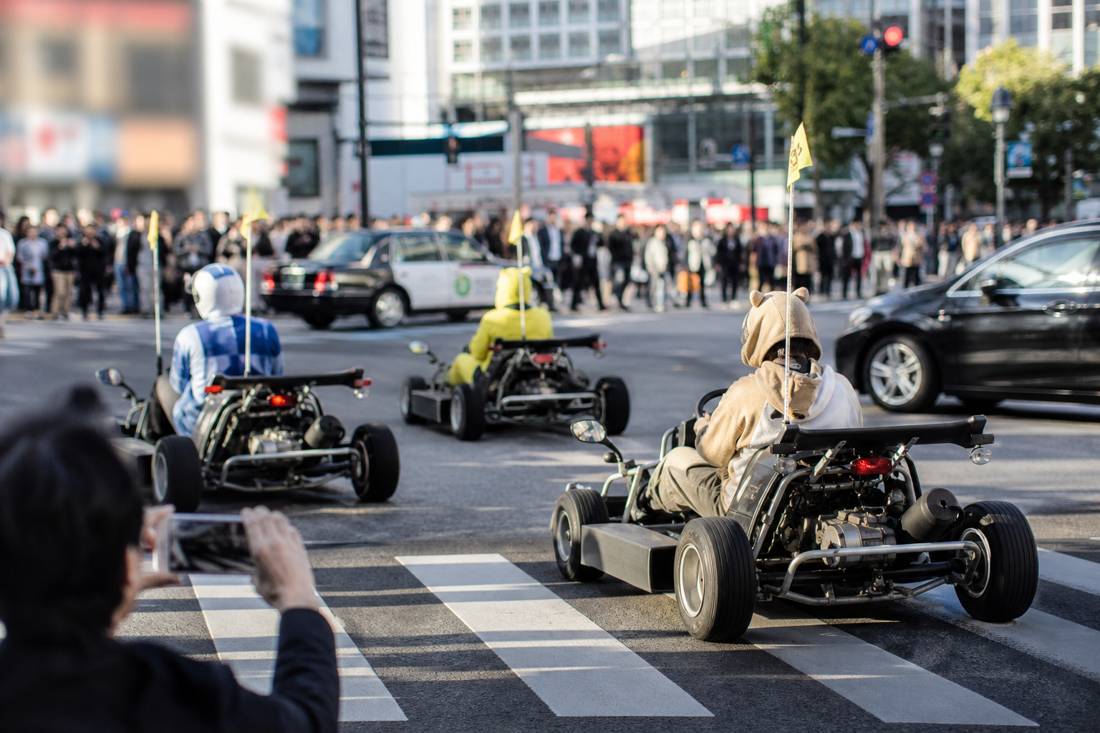
Yes. Tours run daily across Tokyo, including the Shibuya Scramble route. Nothing about the Nintendo case made street karting illegal, and no court ever ordered the karts off the road.
The confusion is understandable. Headlines in 2018 and 2020 read like a company had been shut down, and a lot of them used the phrase "real-life Mario Kart" in the title. What was actually being shut down was the use of Nintendo's intellectual property by a kart company. The kart company kept operating the whole way through the case, and it still operates now under a different name.
So if you have a trip booked and you are wondering whether the thing you saw on YouTube three years ago still exists: it does. You will just not be dressed as Luigi.
Is street go-karting legal in Tokyo in 2026?
Yes. These karts are registered, road-legal vehicles, and you drive them on public roads under ordinary Japanese traffic law. That is precisely why the paperwork is strict: a real driving licence, a 1949-Geneva International Driving Permit, and a minimum age of 18.
It helps to stop thinking of them as fairground karts. Legally, you are driving a small vehicle in Tokyo traffic. You stop at red lights, you indicate, you sit in the flow of cars, and a guide leads the group. The licence requirement is not the operator being cautious. It is the law that applies to anyone driving on a Japanese road.
That also answers a question people ask nervously: no, you are not doing something legally grey that might get you in trouble as a tourist. You are driving a legal vehicle with the correct permit, which is the whole reason the permit is non-negotiable. The full requirements are in our Tokyo go-kart licence and IDP guide.
What happened with the Nintendo MariCar lawsuit?
Nintendo sued over the MariCar name and the rental of Mario character costumes. It won at every stage. The damages ended at 50 million yen, the name had to go, and the costumes had to go. The karting did not.
The case ran for years, which is part of why the story got muddled in people's memory. Here is the sequence.
| When | What happened |
|---|---|
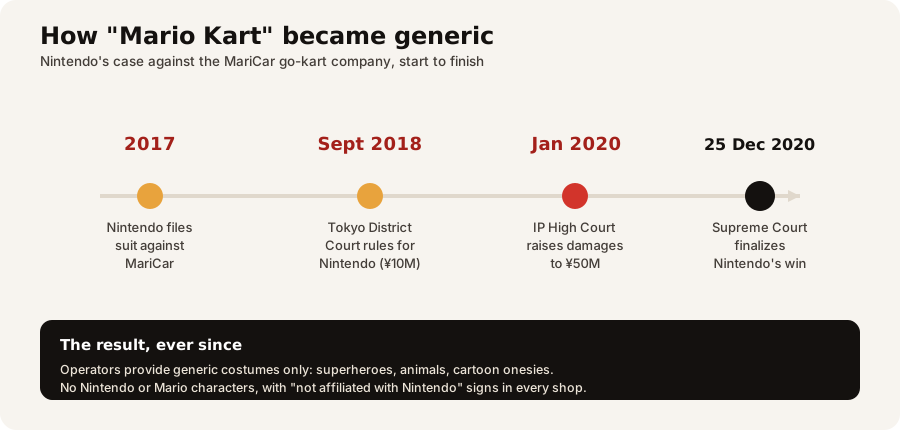
| September 2018 | The Tokyo District Court ruled for Nintendo, ordered the company to stop renting Nintendo-themed costumes, and awarded 10 million yen. |
| 2019 to 2020 | The company appealed. It renamed itself Mari Mobility Development and rebranded the public-facing tours as Street Kart, dropping the Mario imagery. |
| January 2020 | The Intellectual Property High Court sided with Nintendo again, raised the damages to 50 million yen, and ordered the company to stop using the MariCar name. |
| 25 December 2020 | The Supreme Court of Japan dismissed Mari Mobility Development's final appeal, making Nintendo's victory final and the 50 million yen payable. |
Reported by Japan Today and covered in detail by Japanese IP law commentary.
Read that table again and notice what is missing: at no point did any court rule on whether go-karts belong on Tokyo streets. That was never the question in front of them. Nintendo was protecting Mario, not regulating traffic. Our real-life Mario Kart guide goes deeper into the story.
Can you still dress as Mario on a Tokyo go-kart?
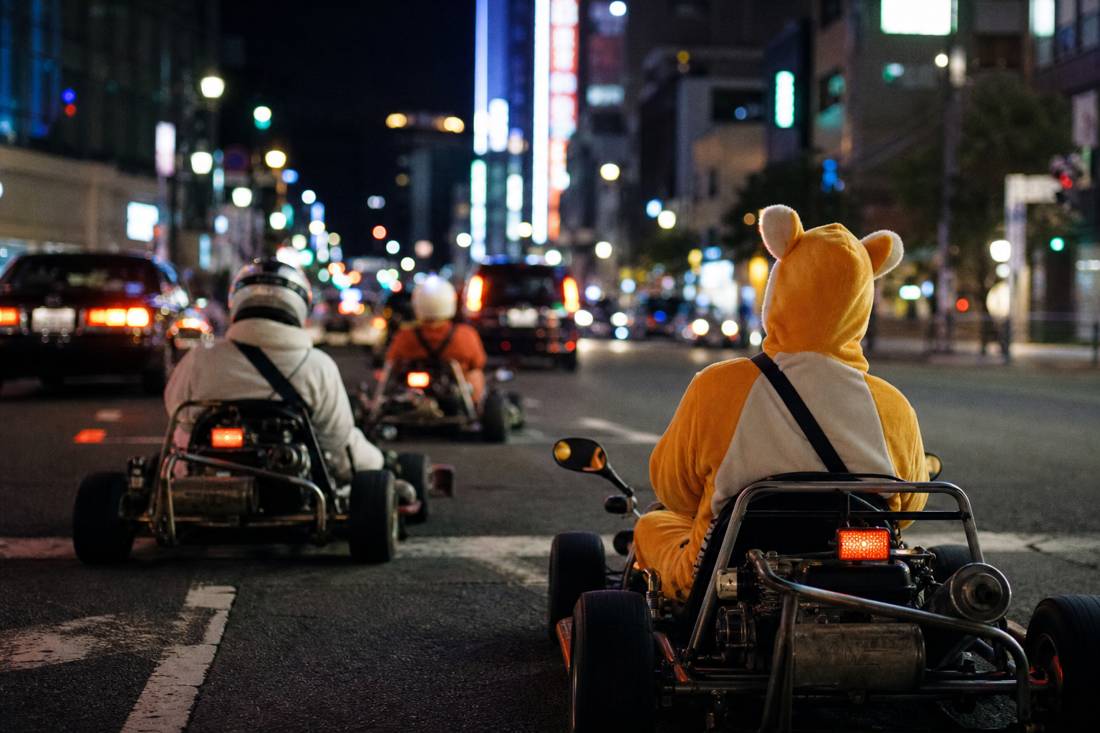
No. That is the one thing that genuinely ended. Operators do not rent Mario, Luigi, Yoshi, Peach or any other Nintendo costume, and they will not let you drive in one you brought yourself.
This is the part people are actually mourning when they ask if it still exists, so it is worth being blunt. The Nintendo character costume is gone, permanently, by court order. Anyone advertising a "Mario Kart tour" with Nintendo characters in 2026 is either using old photos or is not being straight with you.
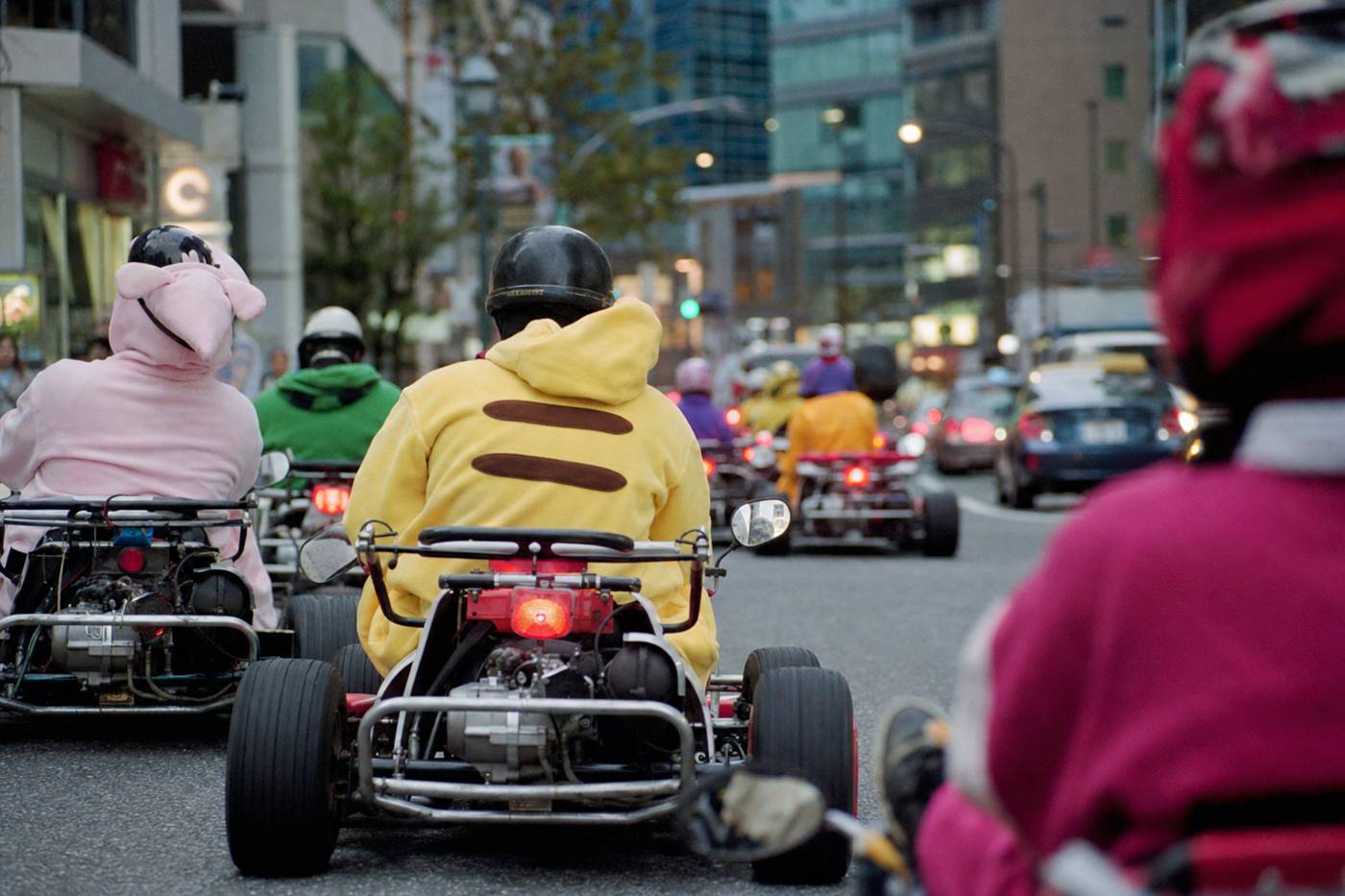
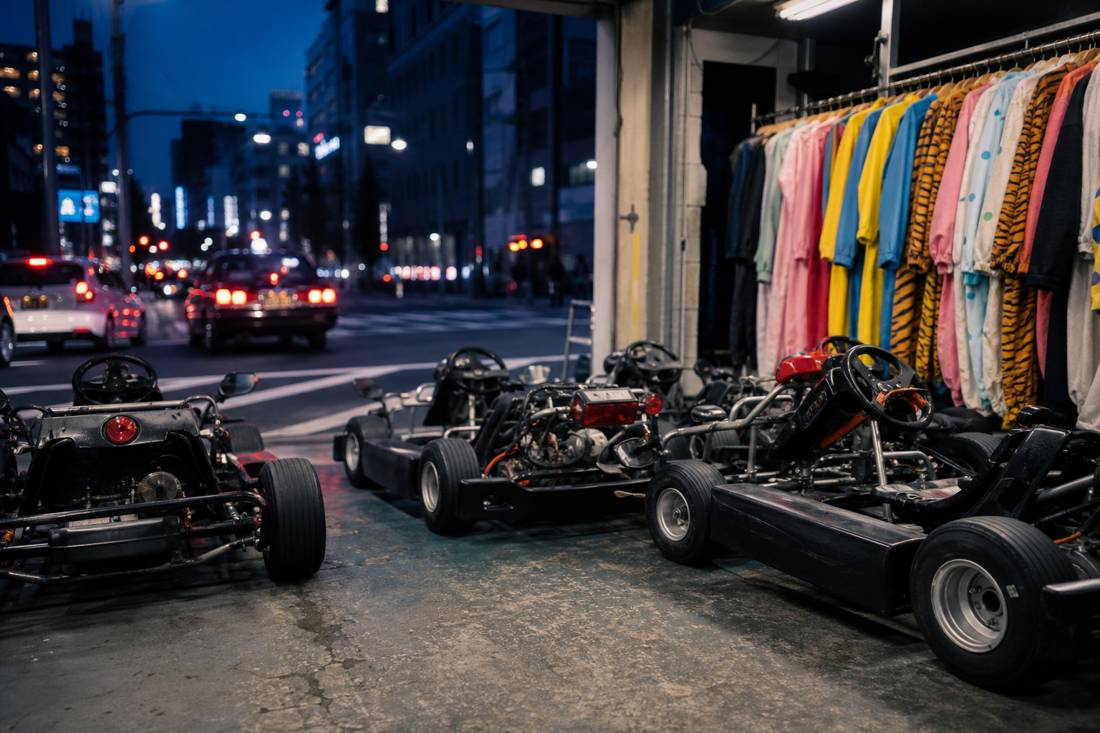
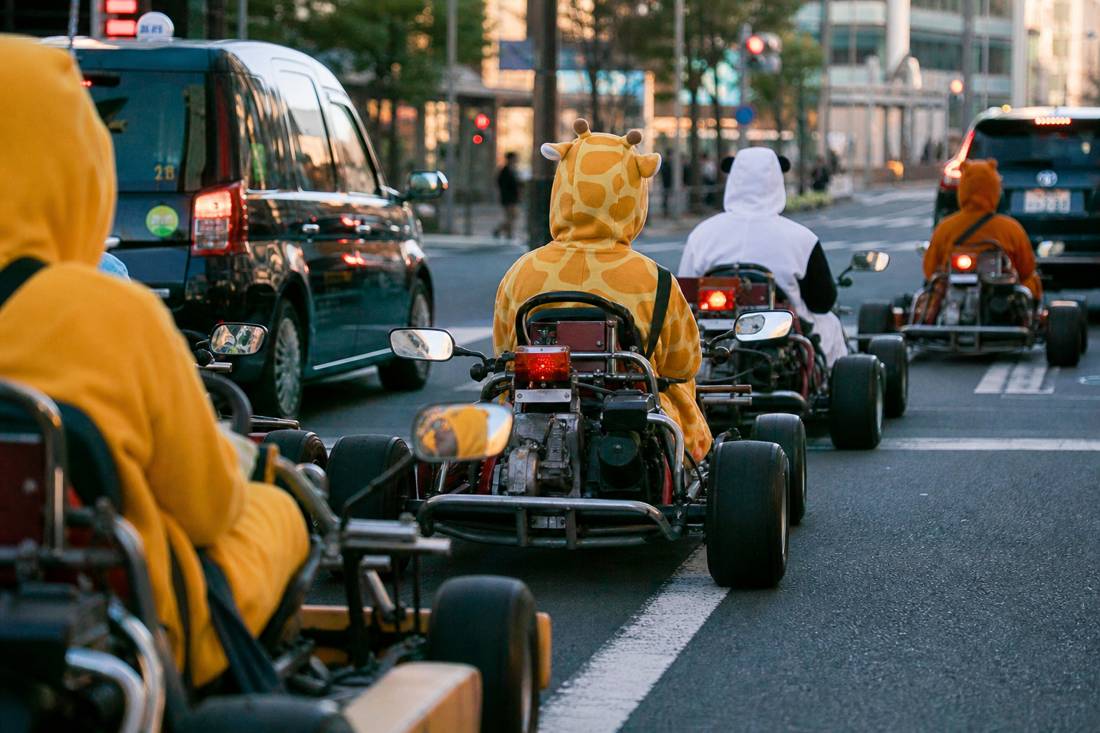
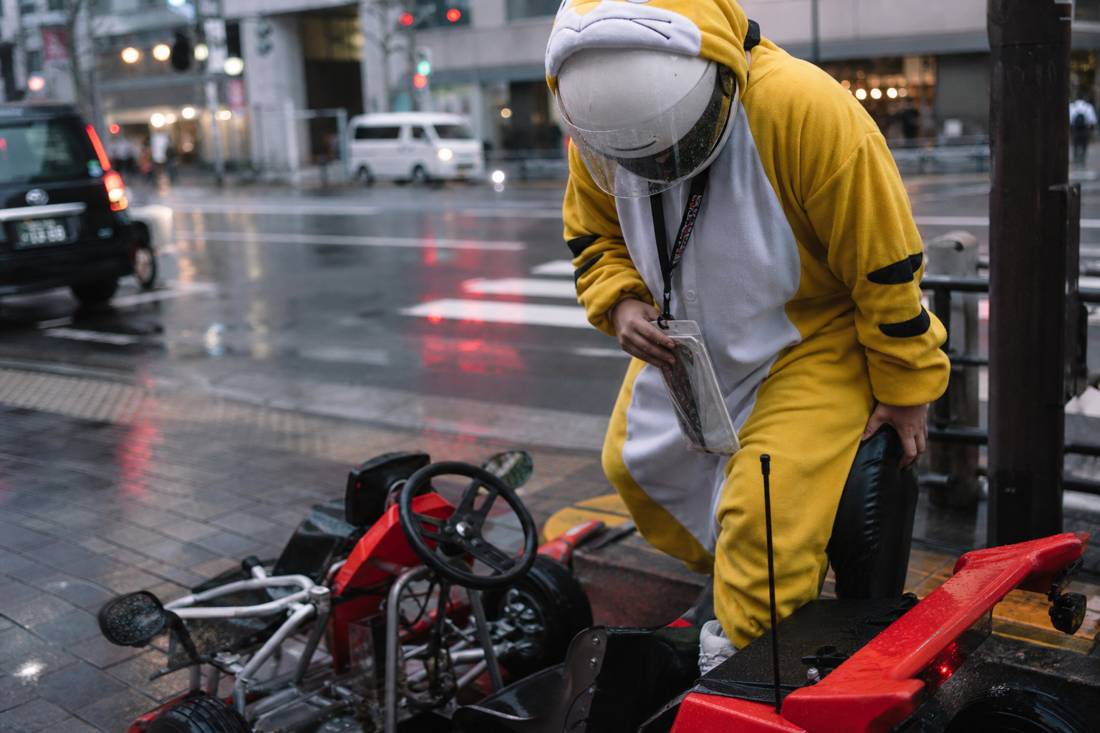
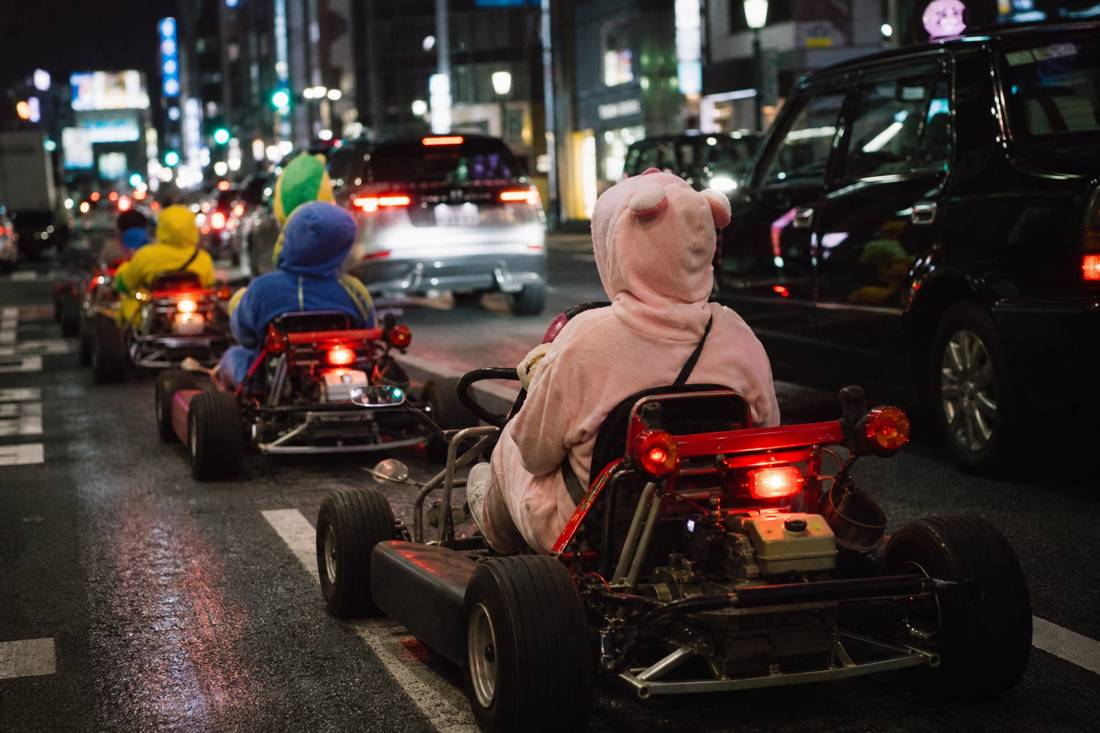
What operators do provide is a costume rack: superheroes, animals, cartoon characters, dinosaurs, all sorts, none of them Nintendo. Most people pick something, take the same photos, and have the same day. The costume was always a garnish. The reason the videos went viral was a tiny kart in the middle of the Shibuya Scramble, and that has not changed at all.
| Before the ruling | Now | |
|---|---|---|
| Costumes | Nintendo characters rented by the operator | Non-Nintendo costumes, still provided |
| Brand name | MariCar | Street Kart and other operator names |
| The karts | Road-legal, on public roads | Unchanged |
| The routes | Shibuya, Akihabara and more | Unchanged |
| Licence rules | Licence + 1949-Geneva IDP | Unchanged |
What do you need to drive one?
Be 18 or over, and bring your own driving licence plus an International Driving Permit issued under the 1949 Geneva Convention. Turn up without the right paperwork and you cannot drive, and you generally will not get a refund.
The trap here catches people every week, so read this bit slowly. It has to be the 1949 Geneva IDP. A permit issued under the 1968 Vienna Convention, the 1926 Paris Convention or the 1943 Washington Convention is not accepted in Japan, no matter how official it looks. You also cannot get an IDP once you land, so it has to be sorted at home before you fly.
- Most countries: home licence + 1949-Geneva IDP.
- Switzerland, Germany, France, Taiwan, Belgium, Monaco: home licence + an official Japanese translation, instead of an IDP.
- Living in Japan: a valid Japanese licence works on its own. A SOFA licence works for US Forces Japan.
Every detail, including where to get each document and what to physically bring on the day, is in our licence and IDP guide. It is the single most common reason a booking falls apart at the counter.
Is it still worth doing without the Mario costumes?
For most people, yes. The costume was never the reason it was fun. Sitting a few centimetres off the tarmac while Tokyo goes on around you is the reason, and no court touched that.
Be honest with yourself about what you came for, though. If the whole point of the trip was a photo of you dressed as Mario in a kart, that photo is not available any more, and no operator can give it to you. If the point was the drive, you have lost nothing.
The Shibuya Scramble at night, from a kart, is still one of the strangest and best things you can do in this city. We give the honest verdict, including who should skip it, in is Tokyo go-karting worth it, and the safety picture in is it safe.
Why do so many people think Tokyo go-karting was banned?
Because four separate stories got folded into one memory. A court win over a brand name, a damages figure, a genuine tightening of local rules, and a police referral over unlicensed drivers all made headlines within a few years. None of them banned street karting, and the tours ran through all of it.
Every one of those stories had a go-kart in the photo, which is how they blurred together. Read separately they are narrow and specific. One is an intellectual property dispute. One is a local government paperwork rule. One is an enforcement action about drivers who did not have licences. The only thing they share is the vehicle in the picture.
The enforcement story is the clearest example of how a headline can read backwards. In September 2024, Tokyo police referred the manager of an Ota Ward go-kart rental firm to prosecutors over renting karts to two unlicensed foreign tourists earlier that year. That sounds like a crackdown on karting. It is actually the opposite: the activity is legal, so the law that applies is ordinary driving law, and renting to someone without a licence breaks it.
| The headline you probably read | What it was actually about |
|---|---|
| "Nintendo wins against MariCar" | The MariCar name and the rented Mario costumes, argued as an intellectual property case. The karts were never the subject. |
| "Go-kart firm ordered to pay 50 million yen" | The damages figure the Intellectual Property High Court set in January 2020, raised from the 10 million yen awarded in September 2018 and finalised by the Supreme Court on 25 December 2020. |
| "Tokyo cracks down on go-karts" | Local rules getting stricter. Shibuya Ward's change on 1 July 2025 requires operators to file safety protocols, driving routes and licence plate numbers at least 30 days ahead for a new location. |
| "Operator referred to prosecutors" | The September 2024 referral of an Ota Ward rental firm's manager over renting to two unlicensed tourists. A story about driver documents, not about the activity. |
| "The company disappeared" | It renamed itself Mari Mobility Development and rebranded the public-facing tours as Street Kart. Same karts, same roads, different sign above the door. |
So if a search result made you nervous, check two things before you believe it: the date, and what the sentence is actually about. Almost every alarming go-kart headline from the last decade is about a name, a costume, a permit form or a licence check. None is about whether the karts may use the road.
What actually tightened, if there was never a ban?
Rules and enforcement, not permission. Shibuya Ward added filing requirements for operators from 1 July 2025, Tokyo police have taken action over unlicensed drivers, and reported incident counts rose through 2024. The activity stayed legal the whole time. The checks around it got firmer.
The pressure came from residents rather than from Nintendo. Convoys crowding the same streets, the odd breakdown mid-route, and a handful of drivers treating public roads as a playground all generated complaints, and Tokyo authorities responded the way authorities usually do: paperwork and policing.
| What was measured | Figure | Period |
|---|---|---|
| Injury traffic accidents involving go-karts in Tokyo | 6 | 2024, against 0 the year before |
| Personal injury accidents, all of them minor | 7 | January to August 2024 |
| Emergency calls about dangerous go-kart driving | 134 | January to August 2024 |
| Property damage accidents | 36, roughly triple the previous year | 2024 |
| Property damage accidents | 14 | by May 2025 |
| Advance notice an operator must give Shibuya Ward for a new location | at least 30 days | rule effective 1 July 2025 |
Tokyo Metropolitan Police counts for the periods shown, plus the Shibuya Ward rule change. Recent figures rather than fixed ones.
Those numbers are small in the context of a city the size of Tokyo, and the injury cases were minor, but the direction matters more than the total. Rising complaint volume is what produced the 2025 filing rule, and it is also why a serious operator now checks your documents with no flexibility at all. The stricter environment is the reason your paperwork has to be right, and we go through the safety picture in full in is Tokyo go-karting safe.
For you as a visitor, the practical effect is short. Book with a licensed, guided operator. Bring the correct paper originals. Drive the way the guide asks. Do those three and the tightening never touches you.
How do you tell a legitimate operator from a rogue rental?
Check three things before you pay: that the tour is guided rather than a hand-over-the-keys rental, that your licence and permit are checked as originals at the desk, and that a real safety briefing happens before anyone moves. An operator relaxed about the paperwork is telling you what else it relaxes.
This matters more than the brand name on the wall. The complaints and incidents that shaped the rules mostly trace back to the loose end of the market, not to the licensed guided tours, and the two look similar in a search result while being completely different products on the road.
| What to check | A licensed guided tour | A warning sign |
|---|---|---|
| Documents | Licence, permit and passport checked as paper originals before you sit in a kart | "A photo of it is fine", or no check at all |
| Briefing | Mandatory: controls, hand signals and rules covered before anyone rolls out | Straight to the kart with a wave |
| Guide | Leads the convoy, sets the pace, picks the line and can pull the group over | Self-drive with no lead vehicle |
| The karts | Registered, road-legal vehicles kept in inspected condition | Condition and registration unclear |
| Costumes | Generic, non-Nintendo outfits provided at the shop | Nintendo characters advertised, which no legitimate operator has been able to offer since 2020 |
The costume line is the fastest tell of all. A court order ended those rentals, so any listing still promising them in 2026 is either recycling photos from before the ruling or is not the kind of operator you want checking the brakes. Our real-life Mario Kart explainer covers what the shops actually hand you now.
None of this makes the road risk-free, and we would rather say so. It does put you with the operators who briefed you, led you and looked at your licence, which is a very different afternoon from the one the critics were complaining about.
What do I tell people who turn up hoping for a Mario costume?
I tell them the truth quickly, and then I get them into a costume anyway. I have guided these tours since 2022, and the disappointment is real for about ninety seconds. It has never once survived the first block of driving.
It comes up most with people who saved a video years ago and never checked whether anything had changed since. They arrive holding a phone with a screenshot on it, and I have to be the person who says no. There are notices at the shop making the lack of any Nintendo connection plain, and I would rather they hear it from me at the counter than work it out from the rack.
What happens next is the part I did not expect when I started. They pick something else, usually a superhero or an animal, they get in, and by the time the convoy has turned its second corner nobody is thinking about it. The photos they send me afterwards are of a person laughing in a costume in the middle of Tokyo, and the licence on the costume was never what made that funny.
The thing I actually wish people worried about instead is the paperwork. Losing the Mario outfit costs you a bit of nostalgia. Turning up without the right permit costs you the whole day, and I cannot fix that one at the desk, which is why I would rather spend my ninety seconds talking about your documents than your costume.
Which route makes the most sense now that the costume is not the draw?
Pick by backdrop and by nerve. The Shibuya run is the famous crossing and the priciest. Akihabara trades the scramble for electric-town neon at a lower starting price. The electric kart is an electric alternative, which is why nervous first-timers tend to start there.
With the costume angle settled, the honest question becomes which forty minutes of Tokyo you want to look at. All three tours have the same shape: a briefing, a costume, a small convoy behind a guide, and roughly forty minutes of driving inside a booked hour.
| Tour | Backdrop | Starting price* | Best for | Rating and reviews |
|---|---|---|---|---|
| Shibuya Street Kart Experience | The Shibuya Scramble | around $120 | The headline photo, the moment people fly here for | 4.9 across 1,700+ GetYourGuide reviews |
| Akihabara Go-Karting Experience | Electric-town neon and stacked anime signage | around $75 | Value, anime and gaming fans, a slightly calmer first drive | 4.9 across 150+ GetYourGuide reviews |
| Tokyo Guided Electric Kart Tour | A 50-minute electric route through Shibuya, Harajuku and Omotesando | around $70 | Nervous drivers who want the gentlest possible start | 5 out of 5 across 100+ Viator reviews |
*Starting prices from the operators' own listings. Street kart pricing is dynamic and moves with the date, the slot and demand, so the live figure on the listing is the only one that counts.
Time of day swings the price as much as the route does. Early and daytime slots are the cheapest, late afternoon catches golden light, and evening runs cost the most because the neon is why people book them. Those evening slots also sell out first, so in peak season treat one to two months ahead as normal rather than cautious. We lay the trade-off out in day versus night.
If you are travelling as a group with mixed confidence, the side-by-side comparison is the fastest way to stop one person spending the hour wishing they had booked differently.
Who should skip a Tokyo street kart tour?
Skip it if dense traffic genuinely frightens you rather than mildly unnerving you, if you came expecting a race track, or if you cannot get the correct permit before you fly. Under-18s cannot drive at all, and the karts are single seaters, so nobody rides along.
We would rather talk someone out of it than sell them the wrong hour. The tours that disappoint almost always went wrong at the booking stage, not on the road, and both of the common mistakes are avoidable from your sofa.
| If you are... | Planning verdict | Why |
|---|---|---|
| A confident everyday driver who wants a story | Go, and take the Shibuya run | The crossing is the memory people travel for, and confidence in traffic is the main thing it asks of you |
| Nervous but curious | Go, but start on the electric kart | Smooth power and a calmer route take the pressure off the first few minutes, and you can graduate later |
| Under 18, or travelling with under-18s | Cannot drive | 18 is the legal minimum for public roads in Japan, and single-seat karts mean no passenger option either |
| Expecting performance driving | Skip it | This is a sightseeing convoy at city speed, not a track day, and an indoor circuit does speed better |
| Genuinely frightened by dense traffic | Skip it | The pace is calm but the traffic is real, and a rattled driver in live traffic is the risk worth avoiding |
| Unable to obtain a 1949-Geneva IDP before flying | Cannot drive | The permit has to be issued at home, and no permit means no drive and generally no refund |
Planning guidance to check yourself against, not operator policy. Confirm eligibility and cancellation terms on the listing you are booking.
Notice that only two rows are hard stops, and both are about documents and age rather than about the Nintendo case. That has been the pattern since 2020: the lawsuit shapes what you wear, and the licence rules decide whether you drive at all. Sort the second one first, using our licence and IDP guide, and the rest is just picking a slot.
Can you still go-kart in Tokyo: FAQ
Can you still go-kart in Tokyo?
Yes. Street go-kart tours run in Tokyo every day, including through Shibuya. Nintendo's lawsuit never made the karting itself illegal. It ended the MariCar name and the unlicensed Mario costumes. The karts, the routes and the tours all continue.
Is street go-karting legal in Tokyo in 2026?
Yes. These karts are registered, road-legal vehicles driven on public roads under Japanese traffic law. That is why you need a real driving licence and an International Driving Permit, and why you must be 18 or over. Nothing in the Nintendo case changed the legal status of the karts.
What happened with the Nintendo MariCar lawsuit?
Nintendo sued over the MariCar name and the Mario costumes. In September 2018 the Tokyo District Court ruled for Nintendo and awarded 10 million yen. In January 2020 the Intellectual Property High Court raised the damages to 50 million yen and ordered the MariCar name dropped. The Supreme Court of Japan dismissed the final appeal. The company had already renamed itself Mari Mobility Development and rebranded its tours as Street Kart.
Can you still dress as Mario on a Tokyo go-kart?
No. Nintendo character costumes are exactly what the courts stopped. Operators no longer rent Mario, Luigi, Yoshi or other Nintendo costumes, and will not let you drive in one you brought. Most still provide plenty of non-Nintendo costumes.
Do you need a licence to go-kart in Tokyo?
Yes. You must be at least 18 and hold a valid driving licence plus a 1949-Geneva International Driving Permit. A 1968 Vienna, 1926 Paris or 1943 Washington permit is not accepted. Get the IDP in your home country before you travel. Drivers from Switzerland, Germany, France, Taiwan, Belgium and Monaco use an official Japanese translation of their licence instead.
Is it still worth doing now that the Mario costumes are gone?
For most people, yes. The appeal is driving a tiny open kart through real Tokyo traffic past the Shibuya Scramble, and that is unchanged. If you were coming purely to be photographed as Mario, that specific thing is gone.
Choose Your Tokyo Kart Experience
Initial editorial recommendation. Use the optional choices to find a closer fit; eligibility is confirmed by the operator.
Match The Experience To Your Plans
Tokyo Guided Electric Kart Tour: Take a 50-minute electric kart route through Shibuya, Harajuku and Omotesando with photo support. 50 minutes.
Official Street Go-Kart Tour - Akihabara: Follow a guided kart route through Akihabara, Ginza and Tokyo Station. 60–90 minutes, plus arrival 30 minutes early.
Tokyo Shibuya Crossing & Hidden Streets Walking Tour: Explore the crossing, Hachiko, Miyashita Park and hidden neighborhood streets on foot. 2 hours.
Yomiuriland Park Pass: Plan an off-road family park day with Yomiuriland’s family go-kart attraction. Park day, allow additional travel time.
Official Street Go-Kart in Shibuya
Have a travel date in mind? Drive Shibuya Crossing, Harajuku and Omotesando with a guide and photo support. Check your date before arranging the rest of your day.
60–90 minutes, plus arrival 30 minutes early · English
Meeting Point, Inclusions And Restrictions
We are on the street level with neon signs. Returns to meeting point
Includes: All taxes, fees and handling charges; Lead guide in a Kart; Costume Rental Fee; Kart Rental Fee; Fuel surcharge
Extras: Hotel pickup and drop-off; Food and drinks; Gratuities; Full Coverage Insurance Fee
Not recommended for travelers with spinal injuries; Not recommended for travelers with poor cardiovascular health; Not recommended for pregnant travelers; You MUST inform us if you have any level of hearing impairment or mobility impairment.
Adults 18+ only. Required original driving documents and operator approval of suitability apply. No passengers. Public-road driving is not a race or a risk-free activity.