2026-06-22
Day vs Night Go-Kart Tours in Tokyo: Which Should You Pick?
A licensed guide compares daytime and night go-kart tours in Tokyo: which has better photos, which is easier for nervous drivers, and how to choose the right slot for your trip.
 By Mia Nakamura, licensed Tokyo guide since 2022
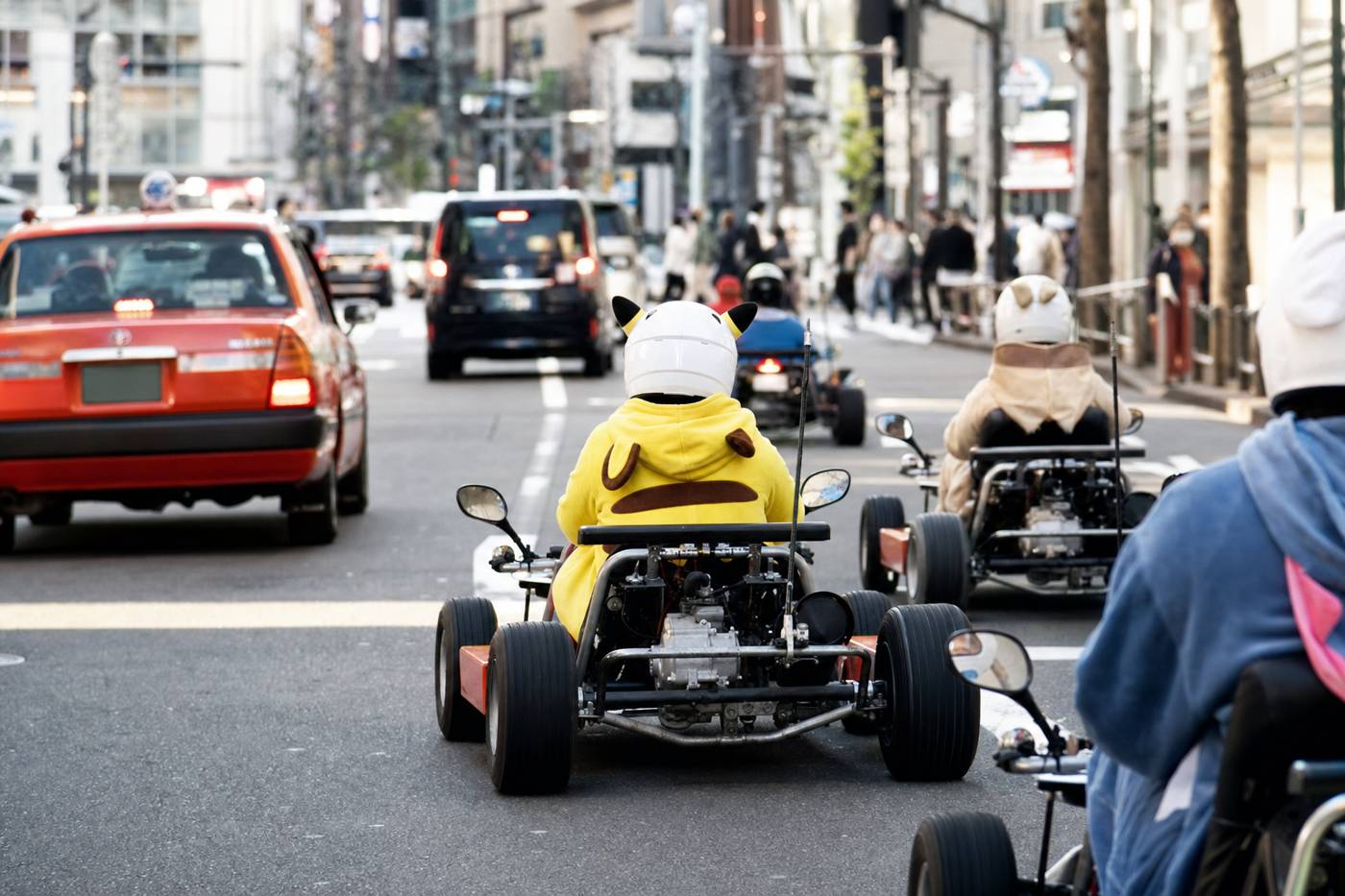
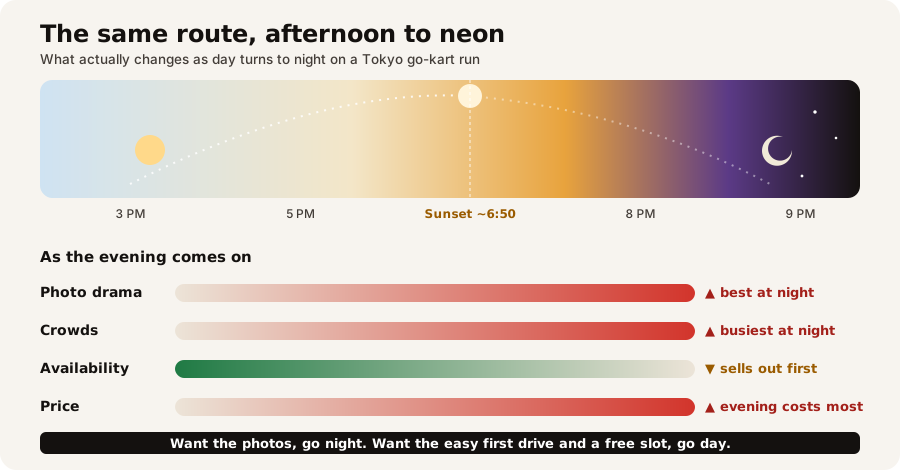
Once people decide to do a Tokyo go-kart tour, the next question is almost always the same: day or night? I get asked it daily, and the honest answer depends on what you want from the hour. Here is how the two compare on the things that actually matter.
Should you do a Tokyo go-kart tour by day or at night?
Choose night for the lit-up city and the best photos, and day for easier conditions and better availability. The night run is more cinematic and the one most people picture, while the daytime run is calmer, simpler to drive, and easier to book. Both cover the same routes.
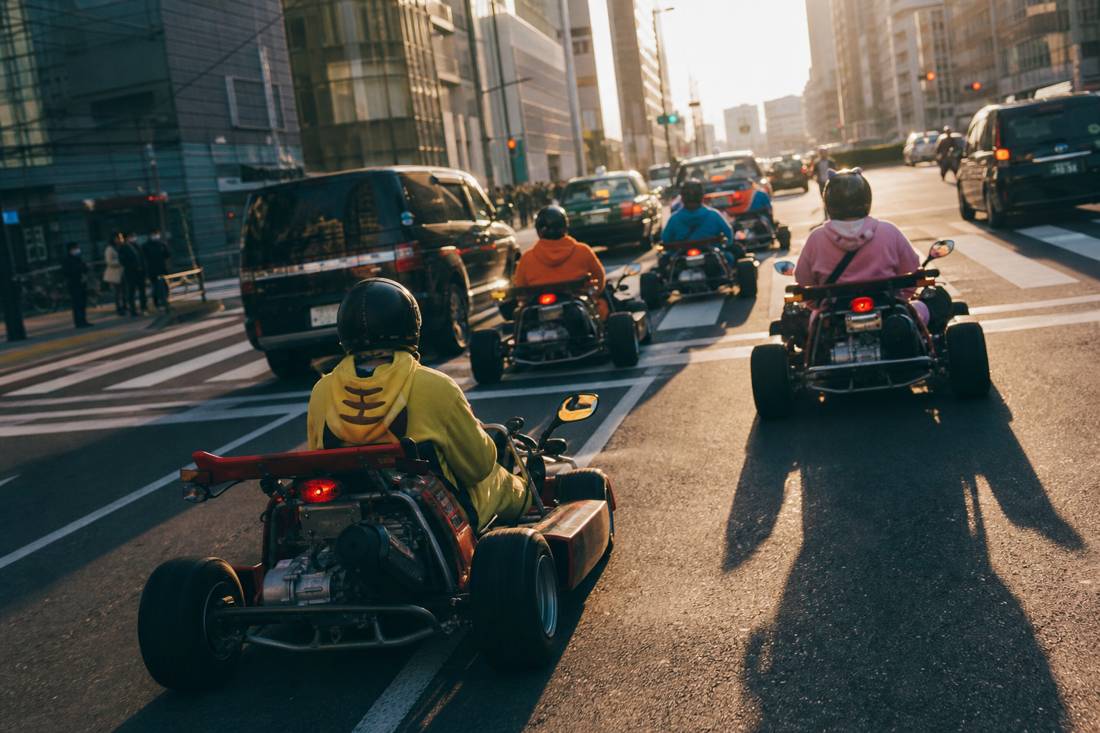
If you only care about one thing, that decides it. Want the neon, the glowing screens, and the version from every film? Go night. Want the lowest-stress first drive and the widest choice of slots? Go day.
For most people the photos tip it toward night, but it is genuinely a trade-off rather than a clear winner, and there is no wrong answer. The driving and the route are the same; the difference is light, atmosphere, and how busy it is. If you are torn between routes too, the compare page lays them out, and a neon-heavy run like the Akihabara go-karting experience leans even harder into the after-dark look.
Price by time slot
| Time slot | Listed price* | The vibe |
|---|---|---|
| Early / daytime (~1 PM) | from ¥12,000 | Calm, clear, easy |
| Late afternoon (~4 PM) | from ¥15,000 | Golden light |
| Evening (~7 PM) | from ¥19,500 | Neon, busiest, best photos |
Street Kart Tokyo's own listed time-slot prices, in yen, from their site; vary by tour and date.
What is the night go-kart tour like?
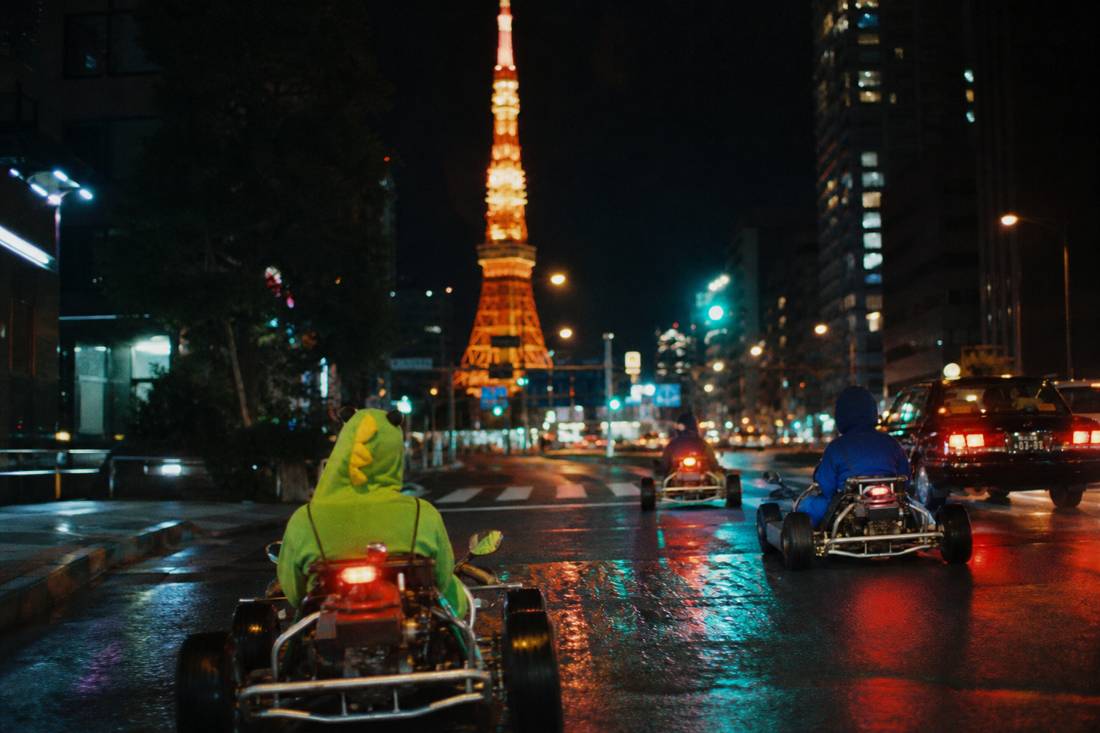
The night run is the cinematic one. The screens and neon are at full blast, the Shibuya Crossing is at its busiest and most dramatic, and the whole city feels electric from a low kart. It is the version that makes people gasp, and the photos are in a different league.
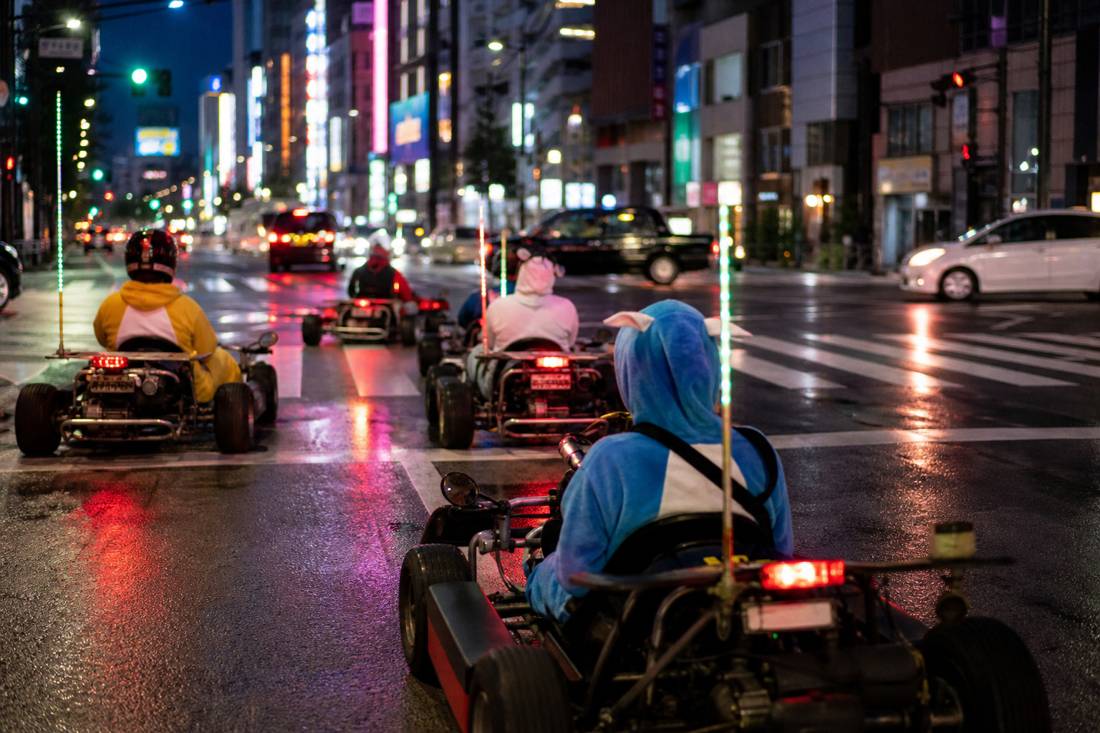
After dark, the same streets you would see by day transform. The signage glows, the Shibuya Crossing fills, and the contrast of lights against the night turns an ordinary lap into something that looks staged. It is the experience the marketing reels are selling, and it delivers. If you want a closer look at that run, I broke it down in driving the Shibuya Crossing.
The catch is demand. Evening slots are the most popular by far, so they sell out first, especially in peak season, and you should book one to two months ahead to secure one. They also cost more, which I cover in how much Tokyo go-karting costs. They can also feel slightly more intense, with heavier crowds and more to take in.
What is the daytime tour like?
The daytime run is the easier, more relaxed option. Traffic and conditions are simpler to read, slots are easier to get, and it is the kinder choice for a nervous or first-time driver. You trade the neon drama for a calmer, clearer experience.
In daylight you see the city plainly rather than glowing, which some people actually prefer for taking in the architecture and the scale of the crossing. It is also the more forgiving environment to learn in, with better visibility and a less frantic feel.
If photos are not your top priority, or if the idea of night traffic adds to your nerves, daytime is a genuinely good call. It is the slot I steer cautious first-timers toward when the night version feels like too much at once. One thing to plan for either way: evenings run colder, so dress accordingly, which I get into in what to wear for a Tokyo go-kart tour.
Here is the day versus night decision boiled down to the things people actually weigh up.
| Factor | Daytime | Night |
|---|---|---|
| Photos | Clear and plain, nice but not cinematic | Neon, glowing screens, the standout shots |
| Crowds | Lighter, thinner foot traffic | Busiest, Shibuya Crossing at its fullest |
| Availability | Widest choice of slots, easier to book | Check the live departure options for your date |
| Ease for first-timers | Calmer, better visibility, kinder to nerves | More rewarding but more to handle at once |
Which is better for photos?
Night, clearly. The lit screens, neon, and busy crossing make for far more striking shots than flat daylight, and the guide's photos come back looking cinematic. If photos are your main reason for doing the tour, book an evening or dusk slot.
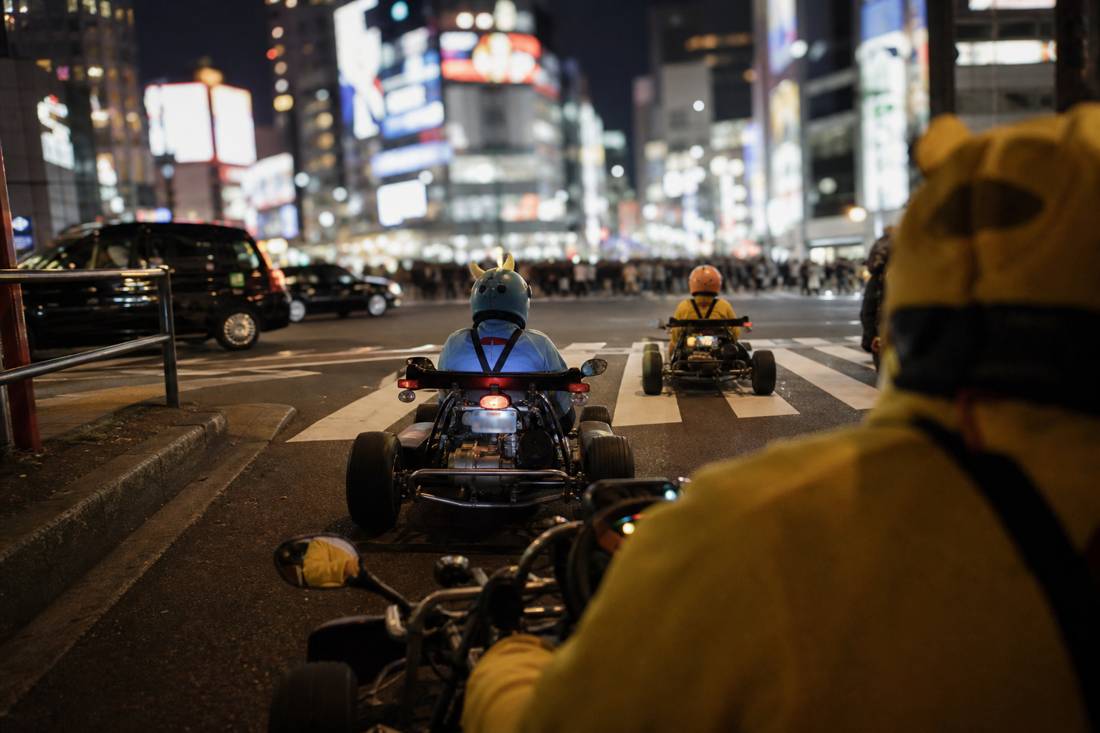
Daylight photos are perfectly nice, but they rarely capture the feeling people are after. The glow of the city is what makes the images look like the ones that sent you searching for the tour in the first place, and for many people that look alone is what makes it worth it.
The sweet spot is a dusk slot that catches the last light and the first neon, giving you both depth and glow. Those go quickly, so book early if that is the look you want.
The neon only really kicks in once it is dark, so it helps to know roughly when the light goes. Sunset shifts a lot across the year here.
| Month | Approx sunset |
|---|---|
| February | ~5:08 PM |
| June | ~6:51 PM |
Sunset times above are for Tokyo (Feb 1 and Jun 1, 2026). In winter you can catch a fully dark, neon-lit run earlier in the evening; in summer you need a later slot for the same effect.
Which is easier for nervous or first-time drivers?
Daytime. Better visibility, lighter crowds, and a calmer feel make the first drive less overwhelming, and pairing a daytime slot with the electric kart is an electric option, with the same need for confidence in traffic. Night is more rewarding but also more to handle at once.
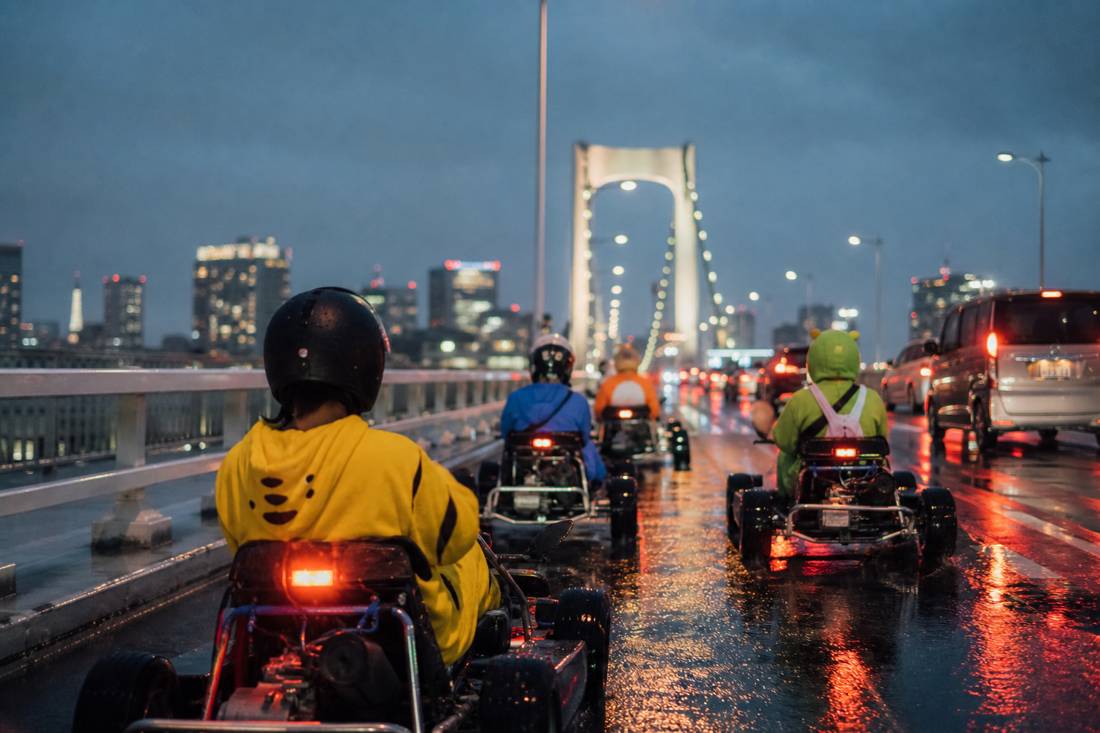
For a first-timer, removing variables helps, and daylight removes a few. You can see further, the crowds are thinner, and the whole thing feels less like sensory overload while you are still getting used to the kart.
If you are nervous but still want some atmosphere, a dusk slot is a reasonable middle ground. For pure ease, though, daytime plus the electric kart is the combination I recommend most.
So, day or night?
Pick night for the photos and the wow factor, and day for ease and availability. If you can handle the buzz and book ahead, the night Shibuya Crossing run is the standout. If you want a calmer first drive or left booking late, daytime is a strong, lower-stress choice.
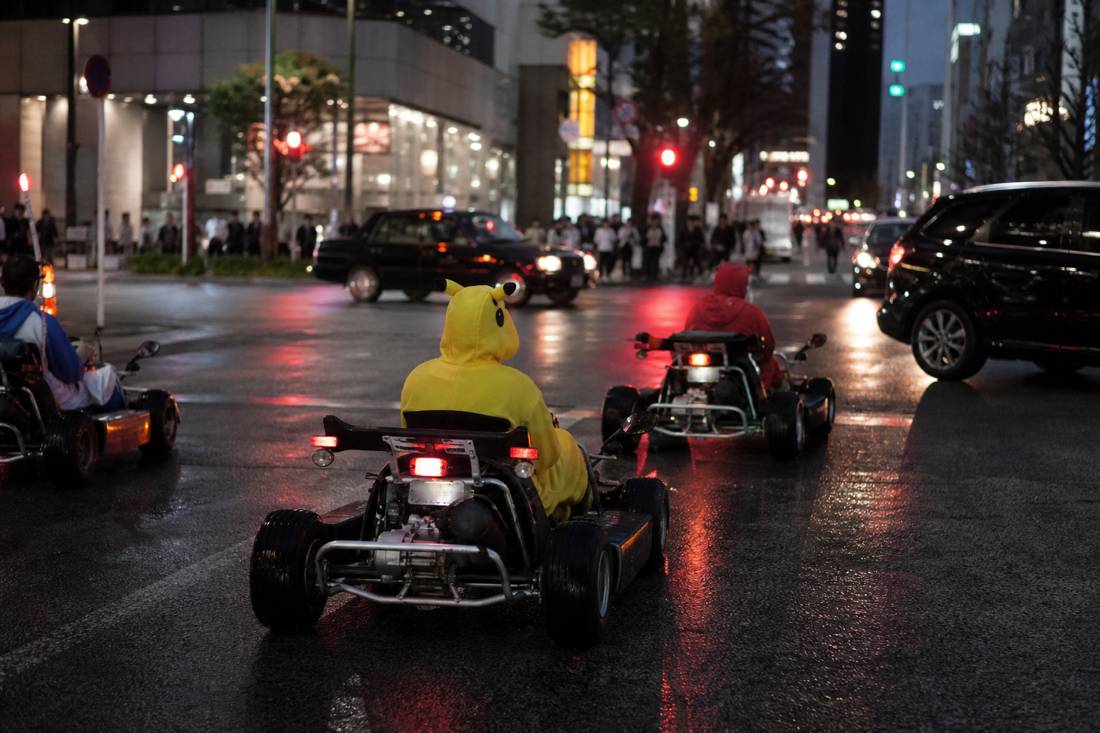
There is no wrong answer, only the right one for you. Decide whether you are chasing the cinematic version or the relaxed one, then book accordingly. Either way, the comparison page helps you match the route to your slot, and the license guide makes sure you can actually drive it.
Choose Your Tokyo Kart Experience
Initial editorial recommendation. Use the optional choices to find a closer fit; eligibility is confirmed by the operator.
Match The Experience To Your Plans
Tokyo Guided Electric Kart Tour: Take a 50-minute electric kart route through Shibuya, Harajuku and Omotesando with photo support. 50 minutes.
Official Street Go-Kart Tour - Akihabara: Follow a guided kart route through Akihabara, Ginza and Tokyo Station. 60–90 minutes, plus arrival 30 minutes early.
Tokyo Shibuya Crossing & Hidden Streets Walking Tour: Explore the crossing, Hachiko, Miyashita Park and hidden neighborhood streets on foot. 2 hours.
Yomiuriland Park Pass: Plan an off-road family park day with Yomiuriland’s family go-kart attraction. Park day, allow additional travel time.
Official Street Go-Kart in Shibuya
Have a travel date in mind? Drive Shibuya Crossing, Harajuku and Omotesando with a guide and photo support. Check your date before arranging the rest of your day.
60–90 minutes, plus arrival 30 minutes early · English
Meeting Point, Inclusions And Restrictions
We are on the street level with neon signs. Returns to meeting point
Includes: All taxes, fees and handling charges; Lead guide in a Kart; Costume Rental Fee; Kart Rental Fee; Fuel surcharge
Extras: Hotel pickup and drop-off; Food and drinks; Gratuities; Full Coverage Insurance Fee
Not recommended for travelers with spinal injuries; Not recommended for travelers with poor cardiovascular health; Not recommended for pregnant travelers; You MUST inform us if you have any level of hearing impairment or mobility impairment.
Adults 18+ only. Required original driving documents and operator approval of suitability apply. No passengers. Public-road driving is not a race or a risk-free activity.