Guide · Tokyo go-karting · licensing
Do you need a license to drive a go-kart in Tokyo?
Short version: yes, and the wrong paperwork is the single most common reason people get turned away at the shop. Here is exactly what works.
 Written and verified by Mia Nakamura, licensed Tokyo guide since 2022
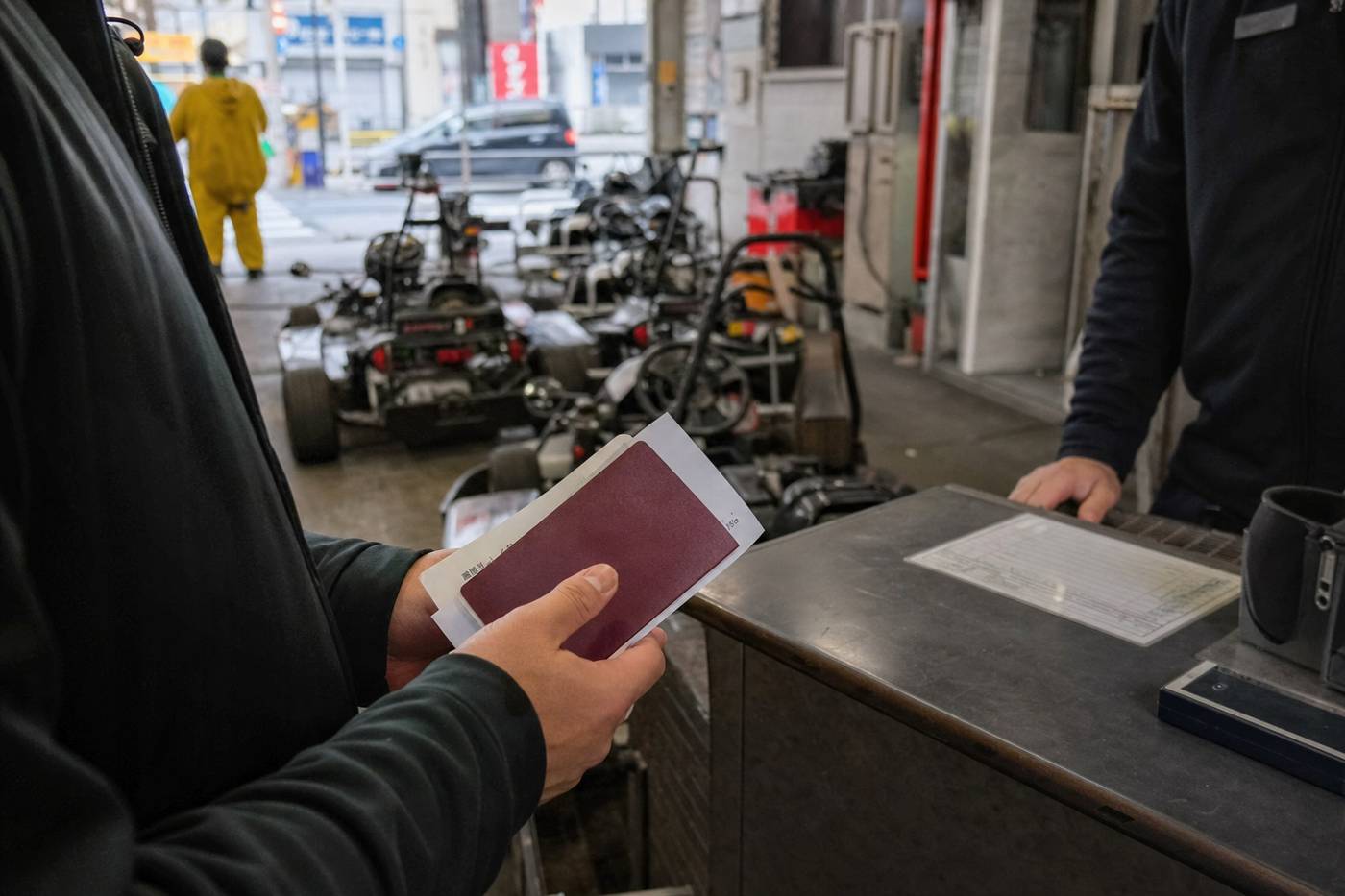
The short answer
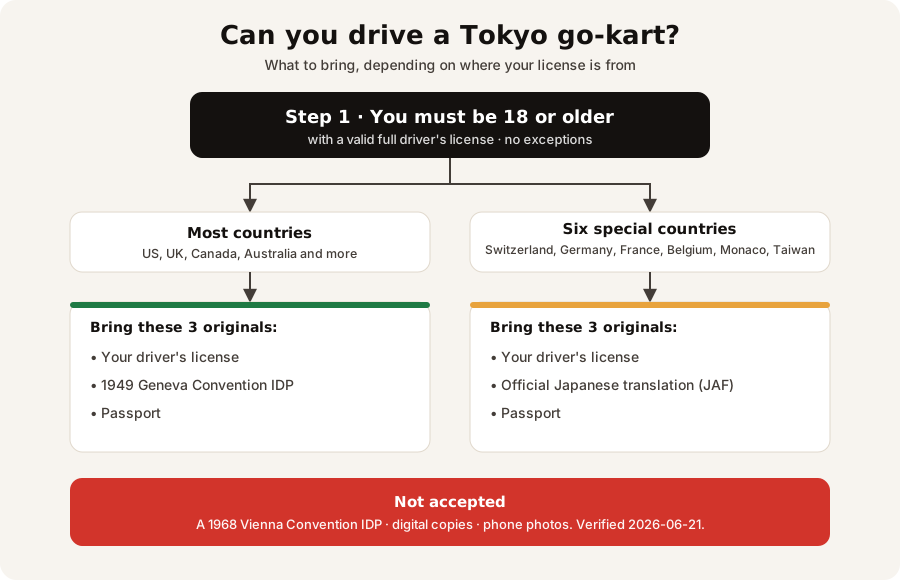
Yes. To drive a street go-kart anywhere in Tokyo you need your home-country driver's license plus an International Driving Permit under the 1949 Geneva Convention, both as paper originals, with your passport. A 1968 Vienna IDP does not work, six countries use a Japanese translation instead, and there is no licence-free way to drive.
Do you need a license to drive a go-kart in Tokyo?
Yes, always. Tokyo street karts are road-legal vehicles driven in real traffic, so the law treats you like any other driver: you need a valid home-country license plus an International Driving Permit under the 1949 Geneva Convention. This applies to every tour and every operator, in Shibuya, Akihabara, and the rest of central Tokyo.
People mix this up with indoor karting tracks back home, where you just show up and drive. Tokyo's appeal is the opposite: you are on the actual streets, past actual landmarks, which is exactly why the licensing is strict. No license means no driving, with no exceptions made at the desk.
What is the 1949 Geneva IDP, and why doesn't a 1968 one work?
Japan recognises International Driving Permits issued under the 1949 Geneva Convention only. An IDP issued under the later 1968 Vienna Convention is not valid here, so if your country issues the Vienna version you cannot legally drive.
An IDP is not a license on its own. It is a standard translation booklet that sits alongside your real license, and the operator checks both. The permit must be the paper booklet form, not a card or a digital copy, with your license category stamped inside. Most English-speaking countries, including the United States, the United Kingdom, Canada and Australia, issue the 1949 Geneva version, so their travelers are fine.
| Accepted | 1949 Geneva Convention IDP (paper booklet) + home license |
|---|---|
| Not accepted | 1968 Vienna Convention IDP, card-style permits, digital copies, phone photos |
| Validity | Up to one year from issue and one year from your entry to Japan |
Which countries need a Japanese translation instead?
Six places do not issue the Geneva IDP, so their drivers use a home license plus an official Japanese translation instead: Switzerland, Germany, France, Belgium, Monaco, and Taiwan.
The usual source is the Japan Automobile Federation (JAF). As of April 2026 the JAF translation costs 6,000 yen, and it can only be arranged inside Japan, so build in a little time after you land. Some embassies and approved services also issue it. You still carry your original home license and your passport alongside the translation.
| Most countries (US, UK, Canada, Australia, and more) | 1949 Geneva IDP + home license + passport |
|---|---|
| Switzerland, Germany, France, Belgium, Monaco, Taiwan | Official Japanese translation (e.g. JAF, 6,000 yen) + home license + passport |
License rules.
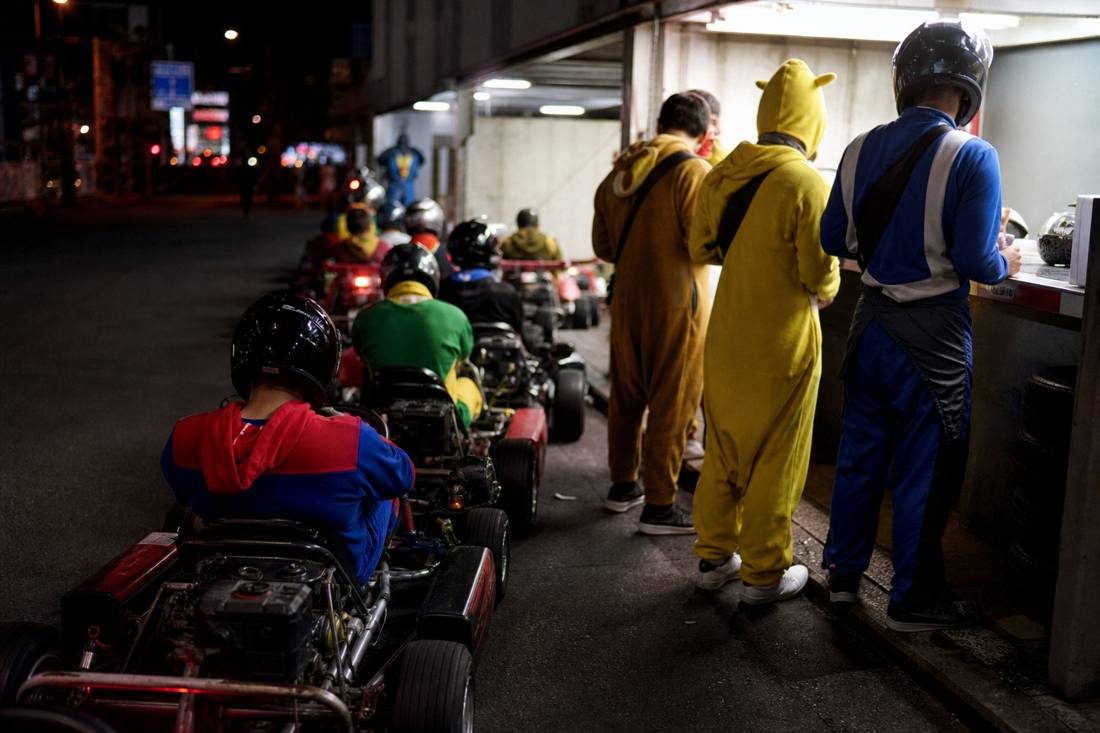
How and where do I get an IDP before my trip?
You get the IDP in your home country before you fly, from the authorised issuing body there. You cannot get a Geneva IDP once you are already in Japan, so this is a before-you-go task.
The issuer depends on where you live, for example AAA in the United States, participating PayPoint shops in the United Kingdom, and CAA in Canada. It is usually inexpensive and often issued the same day, but do not leave it to the airport: bring the right photos and your license, and confirm your country issues the 1949 Geneva version. If you booked the tour months out, the permit's one-year validity means you can sort it well ahead.
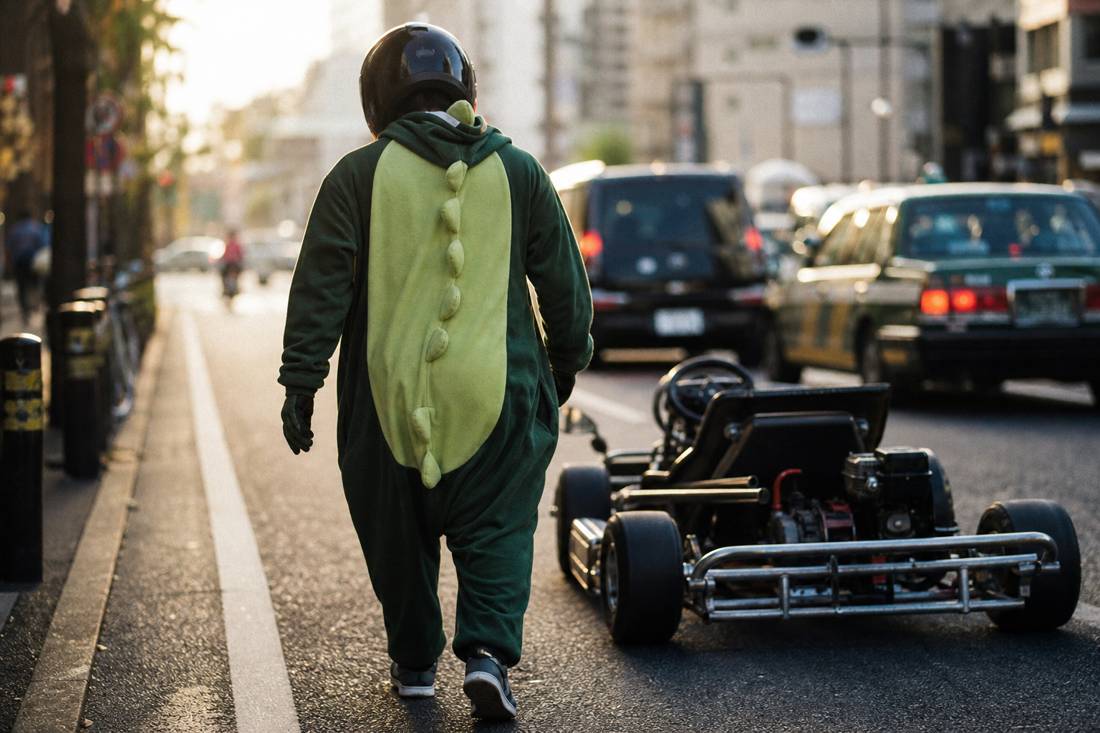
What exactly do I bring on the day?
Bring three things, all as physical originals: your home-country driver's license, your IDP or official Japanese translation, and your passport. Digital copies and phone photos are not accepted.
This is the part that catches people. If you turn up without the valid originals, the operator cannot let you drive, and you do not get a refund. Pack the paper in your day bag the night before, not buried in a suitcase at the hotel.
| 1. Driver's license | Your original home-country license, valid and current |
|---|---|
| 2. IDP or translation | 1949 Geneva IDP, or JAF-style Japanese translation for the six countries |
| 3. Passport | Your actual passport, used to confirm your entry date |
| Not accepted | Photos, scans, app screenshots, expired documents |
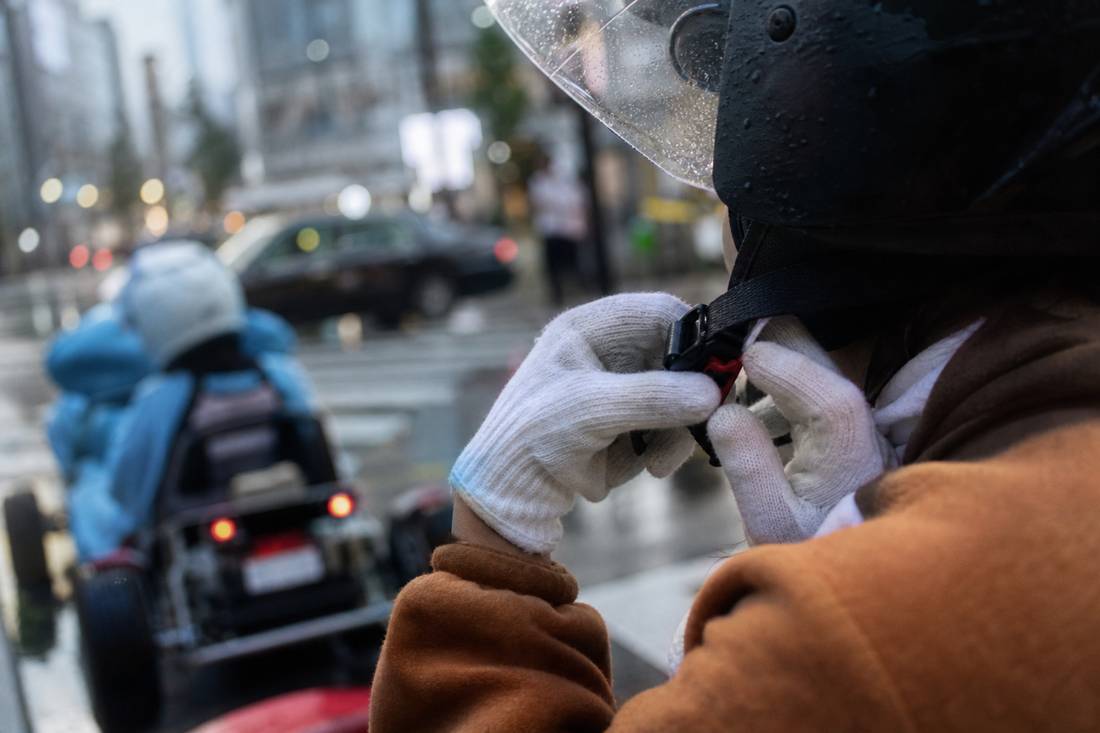
Can you go-kart in Tokyo without a license?
No. Each person drives their own kart on public roads, so there are no passenger seats and no licence-free tours. If you do not have a license, you cannot drive, full stop.
If someone in your group is not licensed, the honest options are limited: they can come along to watch from the shop or meeting point, but they cannot ride in a kart. For anyone set on driving, the fix is simply getting the right license and IDP sorted before the trip.
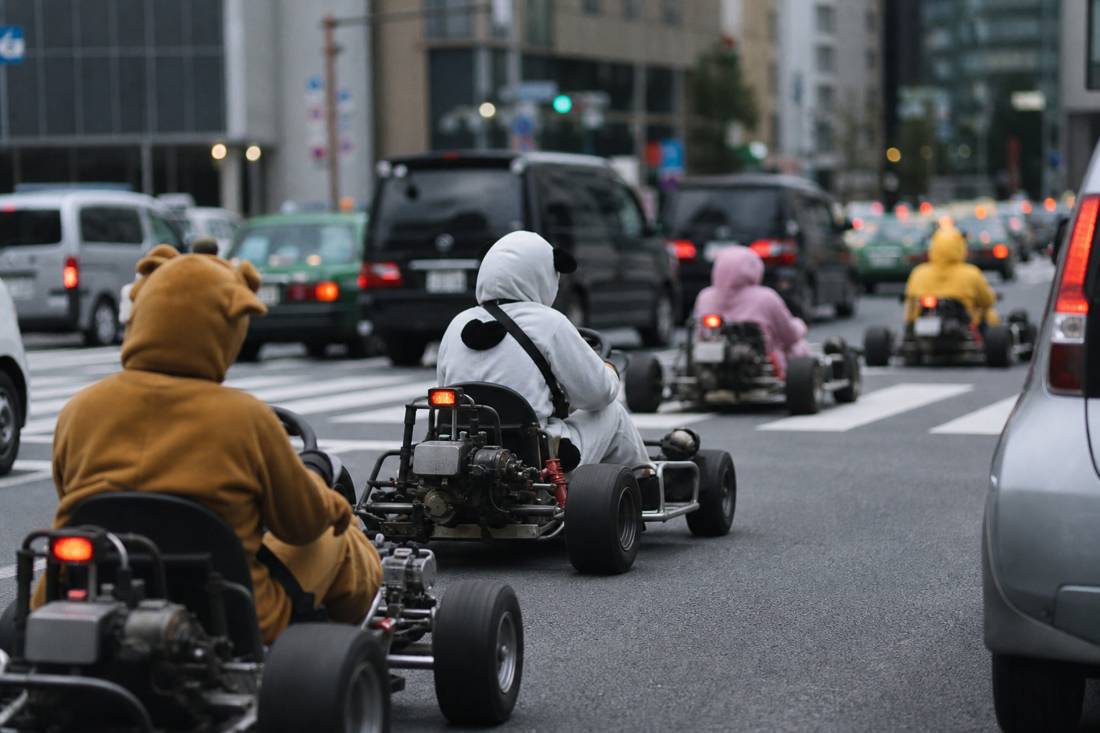
What's the minimum age, and who else can't drive?
You must be at least 18. Japanese public-road law sets the minimum driving age at 18 with no exceptions, so a younger traveler cannot drive even with a license from a country that permits it earlier.
Beyond age and licensing, the practical limits are about safety and fit: you drive sober, you wear closed-toe shoes, and very tall or heavier drivers should check the operator's comfort guidance when booking. None of that changes the core rule, which is always license plus the correct IDP or translation.
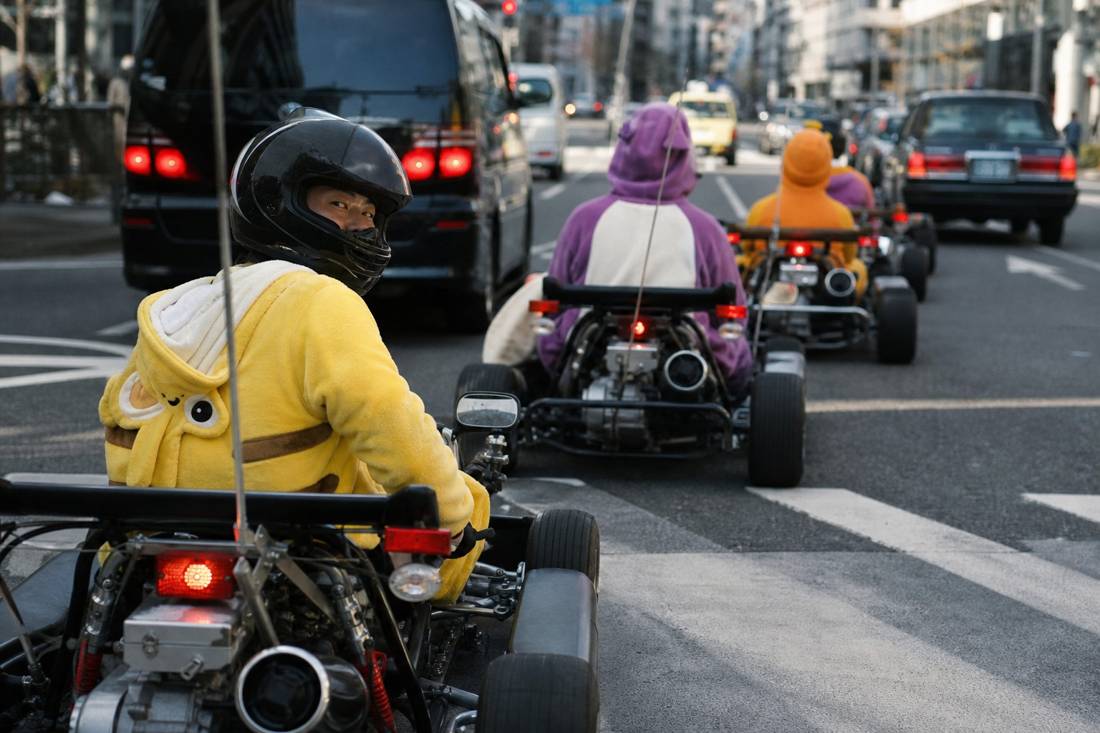
Mia's note from the shop floor
How far ahead should you start the paperwork?
Start the moment your flights are booked. A 1949-Geneva IDP is usually inexpensive and often issued the same day at home, but it cannot be obtained inside Japan, and the six-country Japanese translation can only be arranged after you land. This is a pre-flight task, not a holiday errand.
The permit's validity is generous enough that there is no reason to leave it late. It runs up to one year from issue and one year from your entry to Japan, so a permit collected months before you fly is still doing its job on the day of your tour. People delay it anyway, usually because it feels like the kind of admin that can wait, and then discover their local office needs an appointment.
| When | What to do |
|---|---|
| As soon as the trip is booked | Check which document your licence needs: a 1949 Geneva IDP, or a Japanese translation if your licence is from Switzerland, Germany, France, Belgium, Monaco or Taiwan |
| Two to three months out | Book the kart slot itself if you want an evening run in peak season, because those sell out first |
| About a month out | Apply for the IDP through your country's authorised body, for example AAA in the United States, participating PayPoint shops in the United Kingdom, or CAA in Canada |
| On the permit's arrival | Open it and read the cover. Confirm it says 1949 Geneva, and check your licence category is stamped inside |
| After you land (six countries only) | Arrange the official Japanese translation, for example through JAF at 6,000 yen as of April 2026, which can only be done inside Japan |
| The night before | Put licence, permit or translation, and passport into your day bag as paper originals, not into a suitcase at the hotel |
Planning guidance based on how the documents work. Issuing times and fees vary by country, so confirm with your own authorised body.
The six-country group has the timing problem in reverse. Their translation is arranged inside Japan rather than at home, so they need a little slack after landing rather than before flying. Booking a kart slot for the morning after a long-haul arrival is the version of this that goes wrong most often.
What does the document check at the shop actually involve?
Staff check three physical items before anything else happens: your licence, your IDP or translation, and your passport. The passport confirms your entry date, because the permit's validity runs from when you arrived. Only once all three clear do you get the briefing, the costume and a kart.
It is quicker than people expect, and completely unbending. The check happens at the counter, in front of everyone, and it is the first thing in the sequence rather than the last, which is deliberate. Nobody wants to discover a problem after a group has been briefed and costumed.
| Step | What it covers | What trips people up here |
|---|---|---|
| Document check | Licence, IDP or translation, and passport, all as paper originals | A phone photo, a card-style permit, or the wrong convention. The day stops here |
| Safety briefing | The controls, the hand signals, and how the convoy works | Nothing, beyond not listening properly to the signals |
| Costume | A generic costume, included in the price, pulled on over your own clothes | Loose or flowing clothing underneath, and open shoes |
| Roll out | You follow the guide in a small convoy at city speed | Treating it as a race rather than a led group |
| Driving | Roughly forty minutes on the road inside a booked hour | Reaching for a phone at the wheel, which is illegal in Japan |
| Photos | The guide shoots as you drive and sends the images afterwards | Expecting to film yourself hand-held |
The usual shape of a guided run. Details vary by operator and tour, so read the listing you are booking.
Worth planning around: the booked hour includes the check, the briefing and the costume change, so actual driving lands closer to forty minutes. That is plenty of road, but it is a different number from the one people picture, and knowing it in advance stops the maths feeling like a shortfall.
What are the paperwork mistakes I see every week?
Six mistakes account for almost everyone I have to turn away, and every one of them is fixable at home for the cost of an afternoon. The most common by a wide margin is a photograph of the permit rather than the booklet itself.
I have been guiding these tours since 2022, and this is the part of the job I would happily hand to somebody else. The driving is easy. Telling a couple who flew in from the other side of the world that one of them is standing on the pavement for the next hour is not.
| The mistake | What happens at the desk | The fix, before you fly |
|---|---|---|
| A photo or scan of the IDP on a phone | Not accepted, so that driver does not drive | Carry the paper booklet itself, and put it in your day bag the night before |
| A 1968 Vienna Convention permit | Not valid in Japan, whatever it looks like | Check which convention your country issues before you apply, not after |
| The permit left at the hotel | No drive, unless there is time to go back for it | Pack all three originals together and treat them as one item |
| Assuming Japan can issue an IDP | There is nothing anyone can do at the counter | Apply through your home country's authorised body before you travel |
| An expired home licence | The permit is worthless without a valid licence behind it | Check the licence expiry date, not only the permit |
| A friend planning to ride along | There is no passenger seat to put them in | They either sort their own documents, or plan to watch from the meeting point |
The pattern I notice is that nobody is careless. They are the opposite: they booked months ahead, they read the listing, and they got one detail wrong in a document they had never handled before. The permit is a strange object if you have never seen one, and it is genuinely easy to assume a card in your wallet or a file on your phone is the same thing.
So my ask is small. When your permit arrives, open it, read the front cover, and check it says 1949 Geneva. That is thirty seconds at home, and it is the difference between the hour you booked and the hour you spend on a Tokyo pavement watching your friends drive off.
What if your permit is the wrong one, or there is no time to get one?
Then you cannot drive, and it is better to know that now than at the counter. A 1968 Vienna permit is not valid here, a Geneva IDP cannot be issued inside Japan, and the Japanese translation route only applies if your licence is from one of the six countries.
The order to work through is short. If your licence is from Switzerland, Germany, France, Belgium, Monaco or Taiwan, the translation is your route and you arrange it after you land. If it is from anywhere else, you need the 1949 Geneva IDP and you need it before departure. If you hold a Japanese licence, that works on its own, and a SOFA licence covers US Forces Japan.
If none of those applies to you in time, the honest alternatives are worth saying plainly. An indoor karting circuit is off the public road, so the permit rules do not reach it, and it is faster and weather-proof into the bargain. A non-driving companion can still come to the meeting point and see the group off, but they cannot ride, because every kart is a single seater.
The other thing to handle early is the money. Turning up without valid originals means no drive and generally no refund, so check the cancellation window on your own booking before you pay rather than assuming one exists. The flagship listing has been showing free cancellation up to seven days ahead, but terms sit with the platform and the date, so read yours.
Does the rule change by route, operator or kart type?
No. The requirement comes from Japanese road law, not from any operator's terms, so it is identical on every street kart tour in Tokyo. Shibuya, Akihabara, petrol or electric, the answer is the same: 18 or over, licence, and the correct permit or translation.
People sometimes hope the electric kart is a softer category, or that a shorter route asks for less. It does not work that way. An electric kart on a calm street is still a registered vehicle on a public road, which is exactly the thing the licence rules are written about.
What does change between tours is the platform you book on and therefore the cancellation terms, the route and the price. The Shibuya Street Kart Experience and the Akihabara Go-Karting Experience sell through GetYourGuide, and the Tokyo Guided Electric Kart Tour sells through Viator. The document check at the shop is the same across all three.
That is good news for planning, because it means the admin is a one-time job. Sort the permit once and it covers whichever route you choose, including a change of mind after you land. The tour comparison is where to weigh route against price, and our guide to whether you can still go-kart in Tokyo covers the legal picture behind all of it.
Beyond the documents, what else can stop you driving on the day?
Shoes and sobriety, mostly. Closed-toe shoes are checked at the shop, loose clothing is refused, and you drive sober and phone-free like any other road user. Height, weight and health guidance exists too, but that is operator comfort advice rather than law.
It helps to separate the two layers, because people muddle them constantly. The legal layer is fixed and applies everywhere: age, licence, permit, sober driving, no phone at the wheel. The comfort layer varies between operators and is about fitting the kart and enjoying the hour, so the only figures that count are the ones on the tour you are actually booking.
| Item | Where it stands | What it means for you |
|---|---|---|
| Age | Law | At least 18, set by Japanese public-road law, with no upper limit |
| Closed-toe shoes | Checked at the shop | Trainers are fine. Sandals, flip-flops and heels are turned away, and you wear your own shoes rather than borrowing any |
| Loose clothing | Refused | Long scarves, trailing hems and flowing skirts can catch on the kart, so leave them at the hotel |
| Alcohol | Law | You drive completely sober, exactly as you would a car |
| Phone at the wheel | Law | Using one while driving is illegal, so the guide shoots the photos and a hands-free action camera is the only way to film yourself |
| Height and weight | Operator comfort guidance, not law | Often quoted as roughly 150cm to 185cm and up to about 100kg. It varies by operator and can change, so check the listing |
| Health and mobility | Operator guidance | Operators state the tours are not suitable with mobility impairments, wheelchair use, back problems or pre-existing medical conditions |
| Passengers | Not possible | Every kart is a single seater, so a non-driver cannot ride along on any route |
Planning guidance to check yourself against, not a promise from any operator. Confirm the comfort figures and health terms on the listing you are booking.
An operator’s height, weight, health or mobility restrictions can prevent participation. They are there so you can make an honest self-assessment before you pay, particularly the low seat, which is the one thing photographs never convey. Getting in and out of a kart that sits inches off the road asks something of your knees and back that a car seat does not.
Sort the shoes and the documents together, the night before, and the rest of the day belongs to the driving. Our what to wear and bring guide has the full packing list, and the requirements rundown covers eligibility in one place.
Tokyo go-kart license FAQ
Do you need a license to drive a go-kart in Tokyo?
Yes. Tokyo street karts run on public roads, so every driver needs a valid home-country license plus a 1949-Geneva IDP, carried as paper originals with a passport. There is no licence-free option for driving.
Does a 1968 Vienna Convention IDP work in Japan?
No. Japan recognises the 1949 Geneva Convention IDP, not the 1968 Vienna one. If your country issues the Vienna version, check your options before you travel, because you cannot drive on it.
Which countries need a Japanese translation instead?
Switzerland, Germany, France, Belgium, Monaco and Taiwan. Their drivers use a home license plus an official Japanese translation, for example from JAF (6,000 yen as of April 2026), arranged inside Japan.
Can you go-kart in Tokyo without a license?
No. Each person drives their own kart, so there are no passenger seats and no licence-free tours. Without a valid license and the correct IDP or translation, you cannot drive and you do not get a refund.
Where do I get an IDP?
From your home country's authorised body before you fly, such as AAA in the US, participating PayPoint shops in the UK, or CAA in Canada. It is usually cheap and often same-day, and it cannot be obtained once you are in Japan.
Choose Your Tokyo Kart Experience
Initial editorial recommendation. Use the optional choices to find a closer fit; eligibility is confirmed by the operator.
Match The Experience To Your Plans
Tokyo Guided Electric Kart Tour: Take a 50-minute electric kart route through Shibuya, Harajuku and Omotesando with photo support. 50 minutes.
Official Street Go-Kart Tour - Akihabara: Follow a guided kart route through Akihabara, Ginza and Tokyo Station. 60–90 minutes, plus arrival 30 minutes early.
Tokyo Shibuya Crossing & Hidden Streets Walking Tour: Explore the crossing, Hachiko, Miyashita Park and hidden neighborhood streets on foot. 2 hours.
Yomiuriland Park Pass: Plan an off-road family park day with Yomiuriland’s family go-kart attraction. Park day, allow additional travel time.
Official Street Go-Kart in Shibuya
Have a travel date in mind? Drive Shibuya Crossing, Harajuku and Omotesando with a guide and photo support. Check your date before arranging the rest of your day.
60–90 minutes, plus arrival 30 minutes early · English
Meeting Point, Inclusions And Restrictions
We are on the street level with neon signs. Returns to meeting point
Includes: All taxes, fees and handling charges; Lead guide in a Kart; Costume Rental Fee; Kart Rental Fee; Fuel surcharge
Extras: Hotel pickup and drop-off; Food and drinks; Gratuities; Full Coverage Insurance Fee
Not recommended for travelers with spinal injuries; Not recommended for travelers with poor cardiovascular health; Not recommended for pregnant travelers; You MUST inform us if you have any level of hearing impairment or mobility impairment.
Adults 18+ only. Required original driving documents and operator approval of suitability apply. No passengers. Public-road driving is not a race or a risk-free activity.